
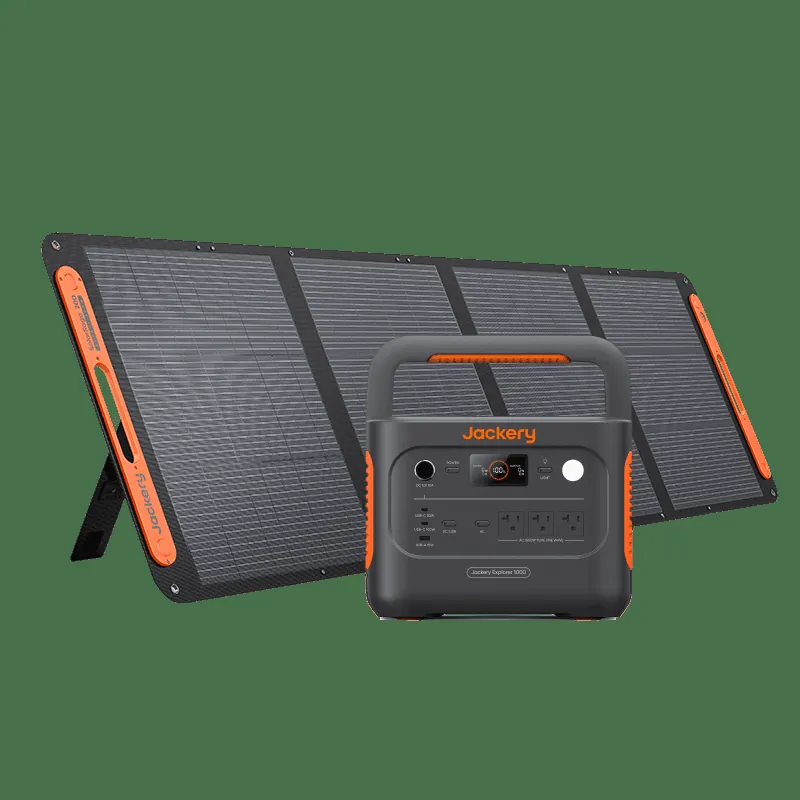
The right solar generator size starts with a boring but useful question: what do you actually need to keep running? A buyer charging two phones at a campsite does not need the same battery as someone trying to keep a refrigerator, router, fan, lights, and medical device online during a power outage.
In plain terms, size your solar generator around two numbers. Watt-hours tell you how much stored energy the battery can hold. Watts tell you how much power the unit can deliver at one time. If those two numbers fit your devices, runtime, and charging plan, you are in the right range. If either one is too low, the setup will disappoint you exactly when you need it.
The Quick Answer
For light camping and phone charging, many shoppers can start around 300 to 600 watt-hours. For powered coolers, fans, CPAP use, laptops, and multi-day trips, 600 to 1,200 watt-hours is a more comfortable range. For outage backup with a refrigerator, router, lights, and device charging, look closer to 1,000 to 3,000 watt-hours. For whole-home comfort, central air, electric heat, well pumps, or long outages, a portable solar generator may not be enough on its own.
Useful rule: required battery size equals the watts your devices draw multiplied by the hours you want to run them, then padded for real-world losses and reserve.
That is the same basic planning logic used for larger renewable systems: the U.S. Department of Energy recommends starting with a load analysis, recording the wattage and daily use of the electrical devices you want to power. For portable gear, you can keep the math simpler, but the principle is the same. DOE load analysis guidance
Know the Three Numbers on the Box
Solar generator listings can feel like alphabet soup, but most buying decisions come down to three numbers: battery capacity, continuous output, and surge output. Battery capacity is usually listed in watt-hours, often abbreviated Wh. A 1,000Wh battery can theoretically deliver 100 watts for 10 hours, 500 watts for 2 hours, or 1,000 watts for 1 hour before losses.
Continuous output is the amount of power the station can deliver steadily. Surge or peak output is the short burst it can handle when a motor starts. Refrigerators, pumps, compressors, and some tools may need a higher startup burst than their normal running draw. Jackery's sizing guide calls out this distinction between continuous and peak power, and notes that some appliances can require several times their running power at startup. Jackery sizing guide
| Spec | What it means | Why it matters |
|---|---|---|
| Watt-hours | Stored battery energy | Helps estimate runtime |
| Continuous watts | Steady output | Shows what can run at the same time |
| Surge watts | Short startup burst | Important for fridges, pumps, and compressors |
Do the Runtime Math Before You Shop
Start by listing the devices you want to run, their watt draw, and how many hours you need each one. If the device label lists amps and volts instead of watts, multiply amps by volts. A 2 amp device on 120 volts draws about 240 watts. Once you have the watt draw, multiply it by hours of use.
The basic runtime estimate is simple: battery watt-hours divided by device watts equals approximate hours. Popular Mechanics explains the same calculation for portable solar generator capacity, with the reminder that real-world conditions usually deliver a little less than perfect lab numbers. capacity and runtime calculation
The reserve matters. Inverters use energy, batteries perform differently in heat and cold, and solar charging rarely happens at the maximum advertised panel output all day. A setup that looks barely adequate on paper can feel small after a cloudy afternoon, a cold night, or one extra device.
Here is a realistic outage example. Say you want to run a 20W internet router for 10 hours, 30W of LED lighting for 6 hours, charge two phones, and keep a refrigerator cold through the evening. The router and lights alone are about 380Wh. Phone charging may add another 30Wh to 60Wh. A refrigerator is trickier because it cycles on and off, so you need to check your own appliance label or measure it with a watt meter if you want a tighter answer. Even before the refrigerator, a tiny battery is already the wrong fit.
That example also shows why "What size solar generator do I need?" is not really one question. It is three questions stacked together: how much stored energy do you need, how much power has to run at the same time, and how quickly can you recharge? A good answer balances all three. A huge battery with weak solar input can still be slow to recover. A powerful inverter with a small battery can start a device but drain fast. A light camping unit may be perfect outside and frustrating during a home outage.
Match the Size to the Scenario
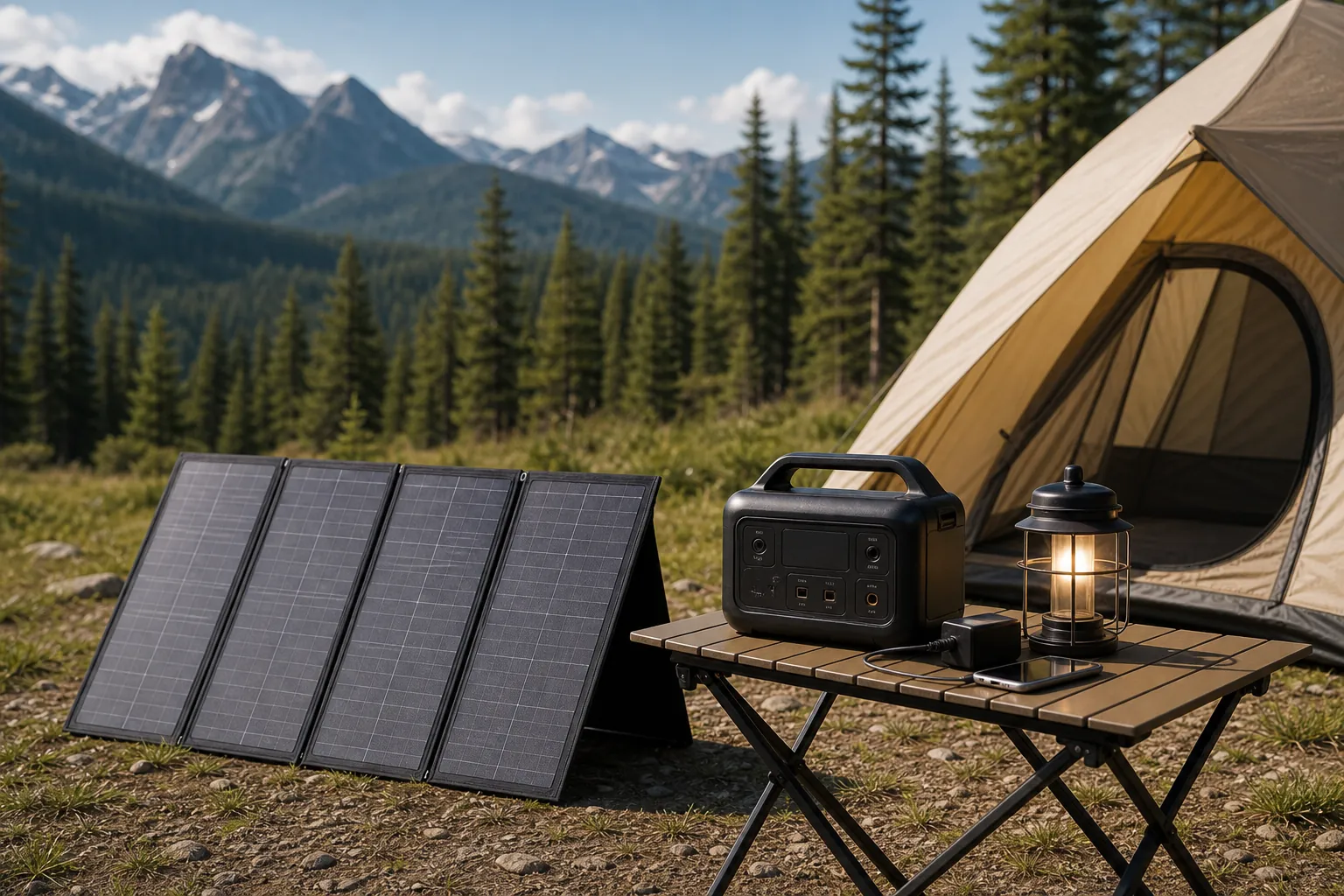
A simple way to avoid overbuying is to pick the scenario first, then compare models inside that range. For phones, headlamps, speakers, and a weekend campsite, portability may matter more than huge capacity. For a refrigerator, medical device, router, and lighting during an outage, battery capacity and surge output matter more than the smallest possible size.
Refrigerators are the classic example because their power draw changes through the day. Lowe's notes that refrigerators commonly use about 300 to 800 watts, while small air conditioners may use around 1,000 watts, and shoppers should check starting watts as well as peak generator limits. Lowe's portable solar generator guide
Small Devices
Phones, lights, radios, cameras, and small USB gear usually fit compact stations best.
Camping Comfort
Fans, coolers, CPAP devices, laptops, and longer trips usually justify a mid-size station.
Outage Backup
Refrigerators, routers, lights, and several devices need more capacity and better surge headroom.
For a home outage, separate essentials from comfort loads. A router, phones, LED lights, and a refrigerator are very different from an electric oven, space heater, clothes dryer, or central air system. High-heat appliances are usually poor matches for small portable stations because they burn through capacity quickly.
If you are between two sizes, think about what failure would look like. On a casual weekend trip, running out of power may be annoying but manageable. During a storm outage, losing refrigeration, communication, or medical-device runtime is a different problem. That does not mean every household needs the biggest unit available. It means the sizing margin should match the seriousness of the job.
Weight is the counterweight to that decision. A larger station may be easier to justify if it sits in a closet, garage, RV, or cabin. For tent camping, fishing trips, tailgating, and small-car travel, a lighter unit that covers the essentials can be the better buy. The best solar generator is the one you will actually bring, charge, store properly, and use without dreading the setup.
Do Not Forget the Solar Panel Side
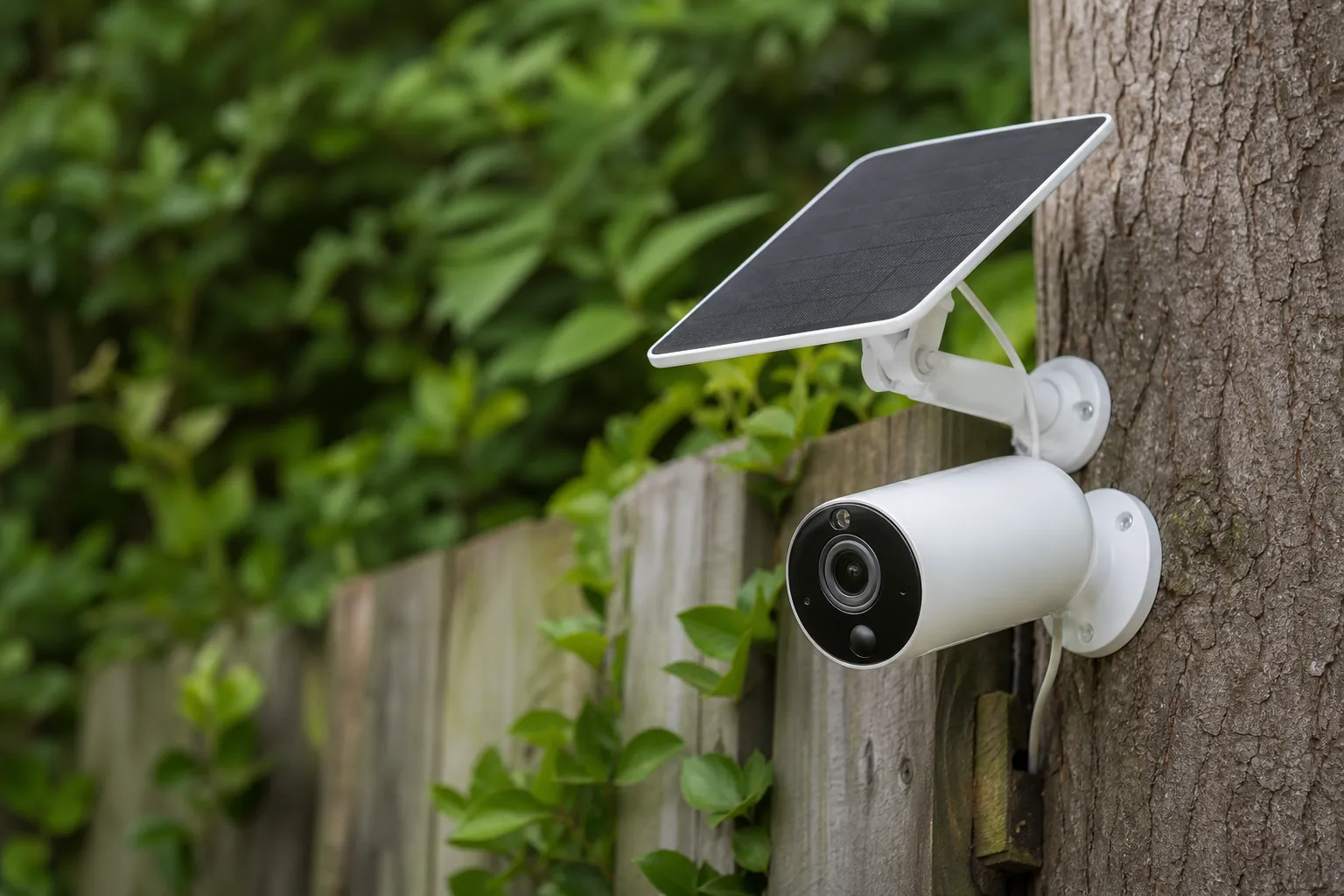
A solar generator is only as practical as its recharge plan. If you use 800Wh overnight and your panel only replaces 250Wh the next day, the battery will fall behind. Panel output depends on sunlight, weather, panel angle, shade, and season. A 200W panel will not produce 200 watts every hour from breakfast to dinner.
For occasional camping, it may be fine to charge at home, use the station outside, and top it up by solar when conditions are good. For outage backup, plan more conservatively. A larger battery gives you a cushion, while more panel capacity helps you recover charge during daylight. If the generator accepts only limited solar input, adding more panels may not speed things up beyond that input limit.
Solar input also changes how you use the system. If you have one small panel, you may choose to recharge phones and lights first, then save heavier loads for wall charging. If you have a larger compatible panel setup, you can be more confident using the station during the day and recovering charge while the sun is strong. Keep the panel pointed well, avoid shade across even part of the surface, and give the setup breathing room so cables and ports are not sitting in mud, puddles, or heavy foot traffic.
Common Sizing Mistakes
The first mistake is shopping by headline wattage only. A unit may have enough output to start a device but not enough battery capacity to run it long. The second mistake is adding every possible device to the list. Backup power gets expensive fast when the plan is vague. Choose the few loads that matter most, then size for those.
The third mistake is ignoring physical use. A station that is great for a garage outage kit may be annoying on a trail, in a tent, or in a small car. Weight, handle design, charge ports, display clarity, and whether the unit can sit safely under cover all affect how useful it feels after purchase.
The fourth mistake is assuming solar solves every outage. Solar helps, but it is slower and more weather-dependent than wall charging. If you need power for medical equipment, refrigeration, or critical communication, build in extra margin and test the setup before the emergency.
Another mistake is ignoring the ports. Capacity is not useful if the station cannot connect to the devices you own. Check the number of AC outlets, USB-A ports, USB-C ports, DC outputs, car-style sockets, and solar input connectors. If several people will charge devices at once, port layout matters more than it seems in a product photo.
Finally, do not skip the test run. Charge the station, plug in the actual devices, and watch the display for an hour. You will learn more from one real test than from ten spec sheets. If the percentage drops faster than expected, reduce the load, add capacity, or adjust your runtime expectations before you are depending on it.
A Simple Buying Checklist
Before you compare prices, write down your must-run devices, estimated watts, hours needed, and whether any device has a motor or compressor. Add the watt-hours, then give yourself a reserve. Next, check that the generator's continuous output can run the devices you plan to use at the same time. After that, check surge output for refrigerators, pumps, or tools.
Then look at recharge options. Can it recharge from the wall before a trip? Can it charge from a car if you are moving between campsites? Does it accept enough solar input for your expectations? The cheapest station is not cheaper if it cannot recover charge when you need it.
Last, compare practical ownership details: weight, handle design, warranty, display readability, storage recommendations, and whether replacement or expansion accessories are available. These details are not glamorous, but they decide whether the generator becomes part of your normal outdoor and emergency kit or sits unused after the first weekend.
How GJB Products Helps You Compare
GJB Products organizes portable solar gear by use case, so you can move from the sizing question to the right product group quickly. Start with the portable power stations and solar generators section if you need stored battery power. Use solar panels and chargers when recharge speed is the missing part. For smaller trips, the camping and emergency gear section can help you avoid buying more battery than you need.
The best next step is to write down your must-run devices, estimate hours, and compare that number against real product capacity. Then check output, surge, ports, solar input, weight, and price. That order keeps the buying decision focused on use, not hype.
Compare solar gearFrequently Asked Questions
Is a bigger solar generator always better?
Not always. Extra capacity is useful for outages and high-draw appliances, but it adds cost and weight. The best size is the smallest unit that can run your must-have devices with a sensible reserve.
Can a solar generator run a refrigerator?
Yes, many can, but the generator must handle both the refrigerator's running watts and its startup surge. Runtime depends on the refrigerator, room temperature, how often the door opens, and the generator's usable watt-hours.
How much solar panel capacity do I need?
Start with your daily watt-hour use, then choose enough panel capacity to replace that energy during realistic sunlight. Shade, weather, panel angle, and season all reduce actual charging speed.
What size is best for camping?
For phones, lights, and small electronics, a compact station can be enough. For a powered cooler, fan, CPAP, or multi-day trip, look at mid-size capacity and make sure the unit is easy to carry.